A migraine diary for iPhone
Say what's happening.
MyGraine writes it down.
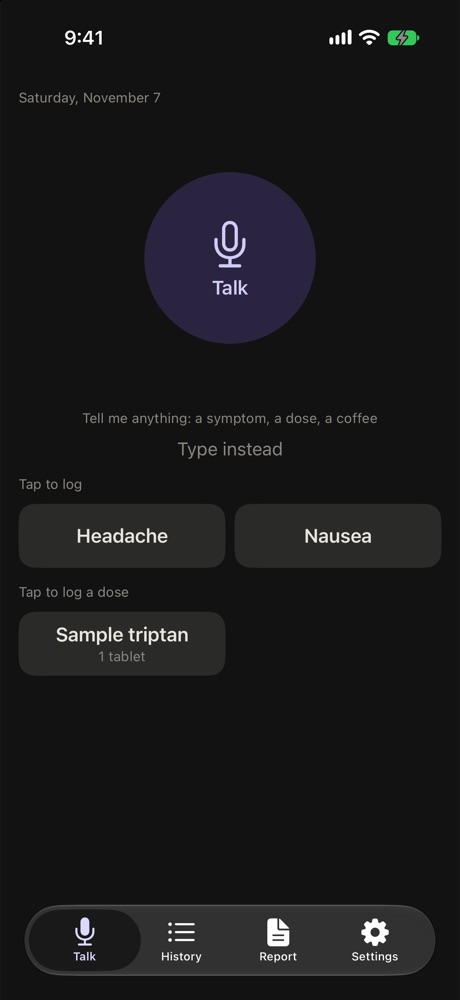
In the middle of an attack, nobody wants to fill in a form. Tap Talk, say "headache since about nine, took my usual tablet", and it's logged, timed and added to the right episode.
A personal project, built for one person's own use. Not on the App Store, and not a medical device.
Talk to log
Dark screens, big targets, no typing. Designed for when the light hurts.
-
1
Speak
Tap the large Talk button and say it in your own words: a symptom, a dose, a coffee, when the pain started.
-
2
It's understood
Speech becomes text on the phone. Claude turns the text into events, and the app matches medication names to your own list.
-
3
You hear it back
A short summary is read aloud, like "Logged head pain at 9:10 AM. Episode started." One card per event, so a wrong one is easy to delete.
Misheard names get checked
Speech recognition often mishears drug names. When a word sounds like something on your list, MyGraine asks "Did you mean…?" before linking it, instead of guessing.
Or just tap
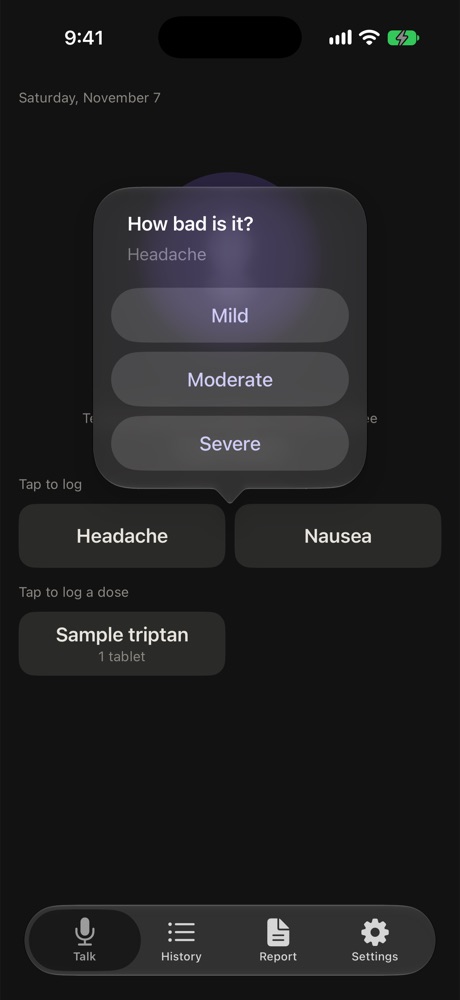
Your usual symptoms and medications become one-tap buttons. A headache asks only one thing: mild, moderate or severe.
The monthly report
Something useful to bring to an appointment.
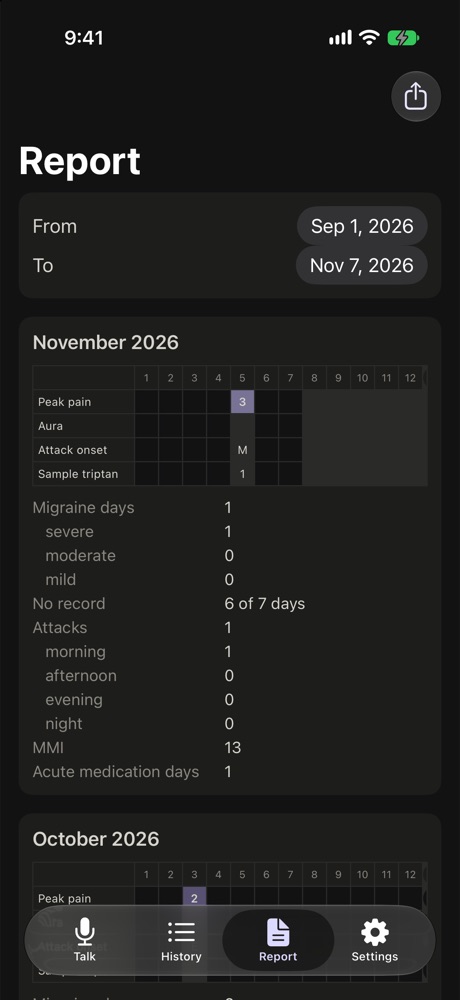
Each month is a grid of days: peak pain, aura, what time of day each attack started, and acute doses. Below it are the totals a clinician asks about.
- Migraine days, by severity, and days with no record
- Attacks by morning, afternoon, evening and night
- MMI: each day's peak pain, summed and scaled to a 30-day month
- Acute medication days, overall and per active ingredient
- Export any date range as a PDF
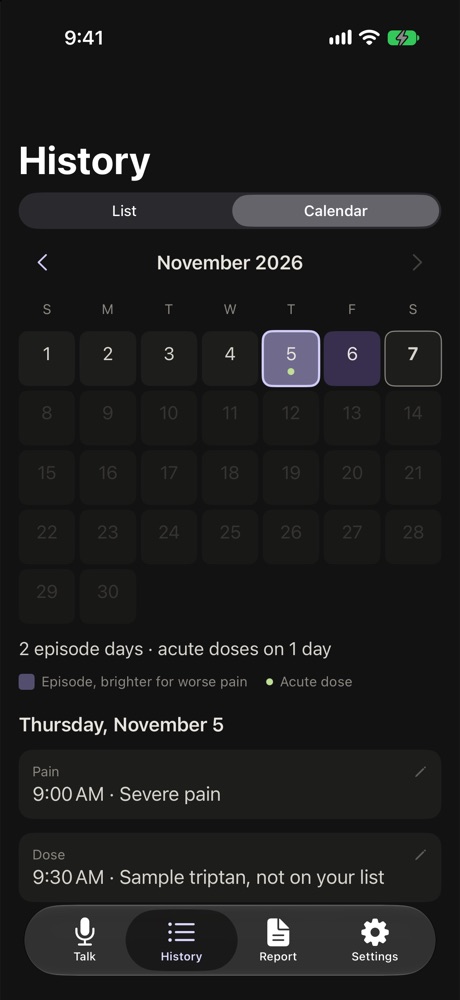
Attacks are grouped into episodes automatically. An episode ends when you say "It's over", or after 72 hours with no entries.
Private by design
A migraine diary is health data. It's treated that way.
Locked with Face ID
Asked for each time the app opens or comes back from the background, with the iPhone passcode as a fallback. Until it's unlocked nothing shows, not even in the app switcher.
Audio never leaves the phone
Speech is turned into text on the iPhone and the recording is deleted.
Your diary stays on the phone
Entries, episodes and your medication list are stored on the device. Only the text of each entry is sent to Claude to be understood.
No dosing advice
The app records what you took. It never tells you when another dose is allowed, or shows limits or warnings.
Screens
From the iOS Simulator, filled with invented sample data.
How it's built
SwiftUI and SwiftData on iOS. Apple's on-device speech recognition for transcription. Claude, through the Anthropic API, turns each entry into structured events; matching medication names, timing and episode rules run in the app's own tested Swift code, not in the model. It replaces an older form-based tracker, and its report reproduces that tracker's monthly totals.